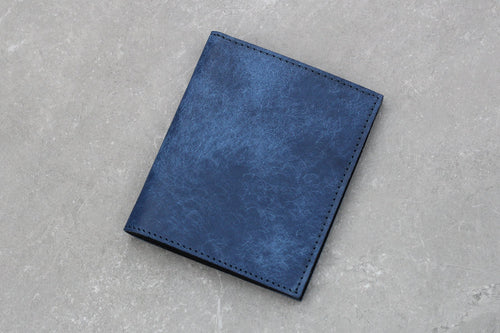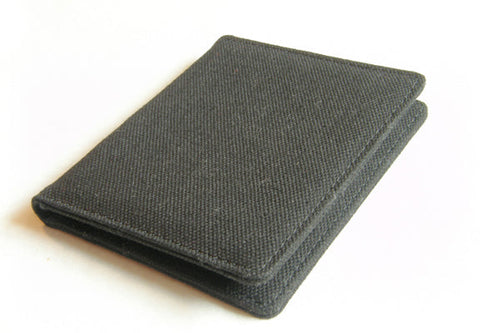
The idea of "not stacking" cards and coins is already commonplace; what Tynd pursued was the next step: "movement."
"Laying cards and coins side by side to reduce thickness" – this idea itself is no longer rare in the world of slim wallets. But when it comes to ease of use, which manufacturer excels? Isn't this where the choices branch out further?

・Coins stacked in a single row are prone to falling out, and the lightly closing lid feels somewhat unreliable
. ・Card pockets designed for horizontal insertion risk cards slipping out when there are few cards inside.
Tynd aimed to end such "sacrifices for thinness."
1. The "folding" action itself signals "opening"
Some are surprised by Tynd's coin pocket. Despite having no button or zipper, the securely closing flap prevents coins from falling out. This was solved by linking it to the everyday, unthinking action of "bending the wallet."
Pick up the wallet and naturally bend it slightly. That force alone causes the pocket opening to snap open automatically. This is Tynd's original design, impossible with simply layering cards and coins. It maintains thinness while eliminating the extra step of unbuttoning. This "shortcut in motion" is precisely what we wanted to invent.
2. Unwavering Security, Whether You Carry "One" or "Five"
Another concern was cards falling out of the pockets. Reviews of other brands often mentioned cards slipping out when there were few inside, and we agonized over how to solve this. Ultimately, we designed a mechanism where the card pockets close when the wallet is folded. However, to address lingering anxiety when opening the wallet, the hidden anti-slip flap is also crucial.
Rewriting the blueprint
While the existing structure avoids overlapping pockets, the internal design is entirely different. The boundary between card and coin compartments—a mere few millimeters of misplacement—would kill this "interlocking" mechanism. After countless prototypes, physically bending the wallet by hand, and understanding the characteristics of canvas and leather, it was finally perfected.
The non-overlapping structure is merely the starting point for achieving thinness. By adding unique twists to existing ideas—like coin pockets that open with the simple daily action of bending, or card pockets that prevent cards from falling out even with fewer cards—Tynd evolved from a mere thin wallet into an indispensable "tool."
Tynd Another thin solahanpu.com/products/ tynd -cv" rel="noopener" target="_blank">https:// solahanpu.com/products/ tynd -cv