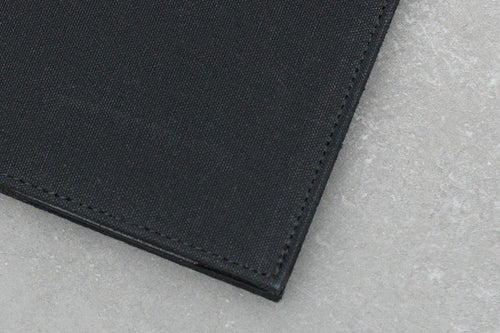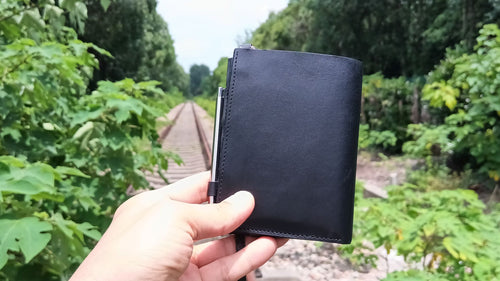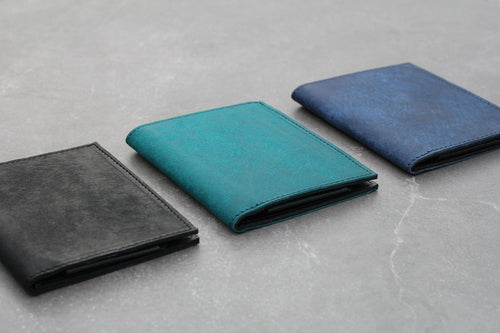
The more minimalist the design, the less room there is for error. In particular, the edge stitching (sewing along the edges) of a wallet is very noticeable even with slight misalignment or irregularity. What makes Tenuis and Tynd's designs work is the fusion of specialized tools and the sewing skills to use them, and the fact that they have to consider the appropriate method for each part of the garment on a daily basis.

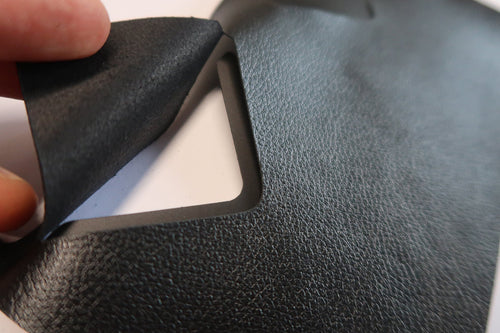
One of the biggest challenges during the development of the Tenuis series was the stitching around the card pockets. The edges of the thin goatskin leather were cut and folded to a specific width, then glued together to match the overall outline of the wallet, and all three sides were sewn from the inside, with a straight line sewn at the end. This was far more difficult than imagined, and even among skilled leatherworkers and seamstresses, there was a clear distinction between those who could do it and those who couldn't. The requirements were so strict that a 1mm error would mean discarding the piece.
SOLA wallets are made with such meticulous calculations and techniques. I often see praise for the craftsmanship of artisans in other manufacturers' wallets as well, and I don't deny that this is true, and I believe they do possess considerable skill. However, the intricate construction of Tenuis's card pockets is not something that every craftsman or factory in Japan can do. It's not simply a matter of the experience and technology of the entire industry; the feasibility of production depends on the structure and each individual part, which is what makes it so profound.
Tenuis 3rd Generation:
https://solahanpu.com/products/tenuis-third
Tenuis 4th Generation:
https://solahanpu.com/products/tenuis-fourth