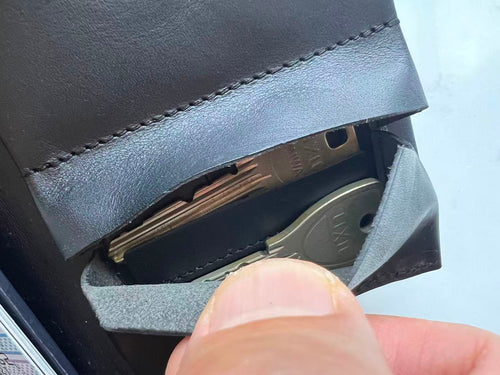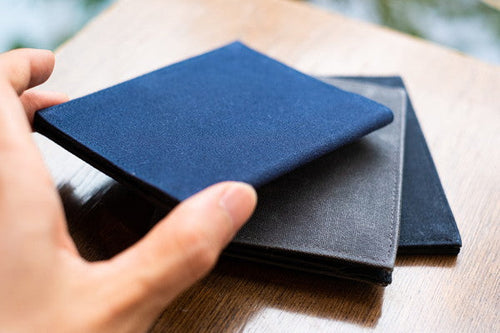
In the “Tenuis” series of slim, compact wallets (both zipper and flap styles), one of the components we pay particular attention to is the “twin card slot.”

At first glance, it may look like a simple card holder, but assembling this part involves a complex series of steps. In this article, we’ll introduce part of that manufacturing process.
1. Precise creasing by hand and roller
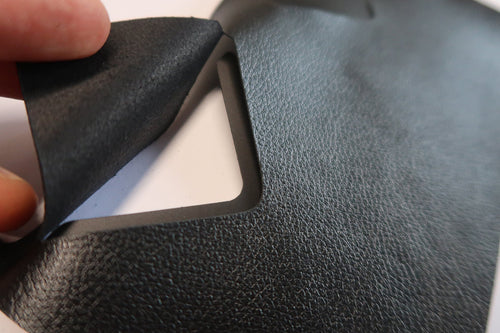
First, we use our hands and a craft roller to create precise, exact creases on the card slot components. Only after confirming that there are no slight misalignments or issues in all three directions can we finally move on to the gluing process. In fact, this stage of creating creases and shaping the parts requires such high precision that it clearly separates the craftsmen and factories into those who “can do it” and those who “cannot.”

2. Meticulous Alignment with Other Layers
Once the shape is finalized, we move on to the bonding stage, but even here, we must meticulously align the shape with the other layers (parts). Since misalignment is very likely to occur at this stage as well, we cannot let our guard down for even a moment.
3. Sewing the Three Difficult Sides and the Center
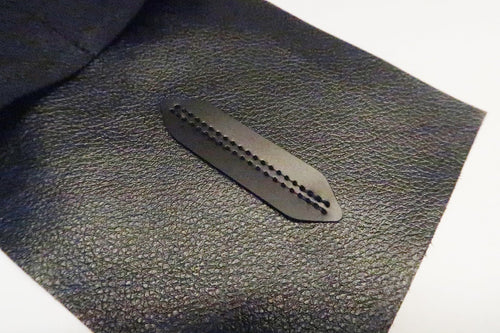
Next comes another challenging process: “sewing.” The machine must be operated so that there is absolutely no misalignment on all three sides, and finally, a “straight center line” is sewn to divide the card holder into two compartments.The difficulty lies in the fact that the three sides are sewn from the “inside.” As the piece takes on a pouch-like shape with each side sewn, it’s truly difficult to sew while navigating around the obstructing parts of the three-dimensional structure.
This is not meant to criticize other companies’ products, but even when looking at typical compact wallets in the 20,000 to 30,000 yen range, it’s rare to find one that involves such a complex and labor-intensive process.
Not only the twin card slots featured here, but also the way the front and back leather are joined, as well as the construction of the hidden pocket, contribute to the considerable number of production steps involved in creating a Tenuis wallet.
It is this accumulation of meticulous trial and error and effort in the unseen details that creates the wallet’s reliability as a tool and its slim profile that fits neatly in a pocket.
Tenuis Zipper Type (*Previous Tenuis 3rd Generation) Canvas Version (Scheduled to be brought back soon)
https://solahanpu.com/products/tenuis-zipper-canvas
Tenuis Zipper Type (*Previous Tenuis 3rd Generation)
https://solahanpu.com/products/tenuis-zipper
Tenuis Flap Type (*Formerly Tenuis 4th Generation)
https://solahanpu.com/products/tenuis-flap