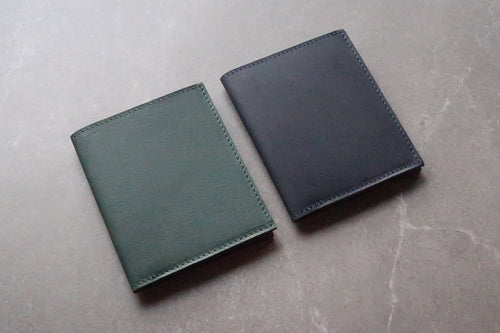
We are currently working on prototypes and finalizing specifications in preparation for the first production run of the Tenuis Zipper-Type Canvas Wallet in several years. The Tenuis has long been popular as a slim, compact wallet, and today we’d like to give you a glimpse into some of the manufacturing processes unique to the canvas version.

Today, we’d like to introduce the finishing process for the wallet’s “edges and corners.” While these areas aren’t immediately noticeable, they are a crucial part of the manufacturing process that affects the beauty, craftsmanship, and durability of this slim, compact wallet.
In the leather version of Tenuis, the resin board used as the internal core is designed to sit slightly inward, not extending all the way to the very edge. Since leather does not fray, we can use the raw edge as is without folding it over.
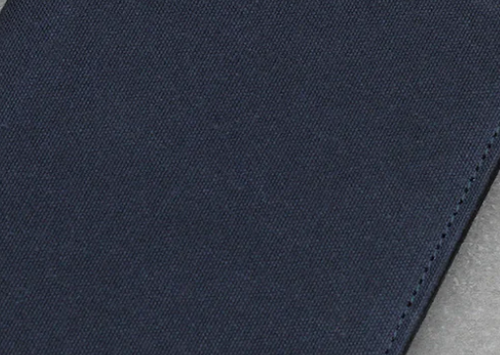
On the other hand, the situation is slightly different for the canvas version. While waxed canvas does have some natural tendency for the fibers to stick together, leaving the edges exposed will still result in fraying. Therefore, the canvas edges must be folded inward toward the core material—which extends to the very edge—and hidden in an invisible location to complete the finish.
There are several methods, but since SOLA aims to define the corners clearly, I’ll explain the methods based on whether they meet that standard. First, here’s the method SOLAHANPU does not use because it makes it difficult to define the corners.
1: Fold the canvas diagonally toward the corner

2: Fold in the vertical and horizontal sections of the canvas around the corner you just folded

While this method hides the edges, it causes the corner to bulge out, making it difficult to achieve a clean, defined corner. Next, I’ll show you a method that makes it easier to define the corners clearly.
1: Fold the canvas along the wallet’s width toward the corner

2: With the horizontal canvas already folded, fold in the vertical canvas

3: Use a tool to trim the excess canvas that extends beyond the vertical fold (during the final step of bonding it to the goatskin, any remaining frayed edges will be trimmed, and the excess will be readjusted and pressed back in).

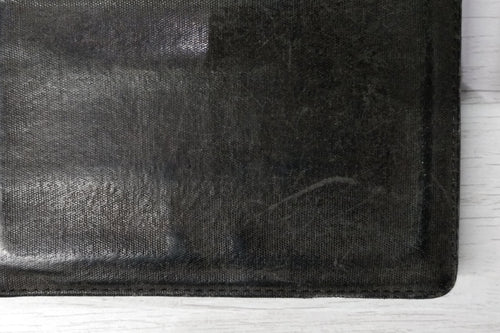
Using this method, you can achieve clean corners like those shown in the photo at the beginning. While other traditional techniques, such as rounding the corners, exist in the wallet industry, SOLAHANPU currently employs this method.
Although this is just one part of the process, we are currently making fine adjustments in preparation for the production of the Tenuis zipper-type canvas version—our first in several years. If you’re looking for a slim wallet, a compact wallet, or a canvas wallet, we hope you’ll look forward to its completion.
Tenuis Zipper Type Canvas Edition
https://solahanpu.com/products/tenuis-zipper-canvas